New publication: Prof. Dr. Éric Pommier


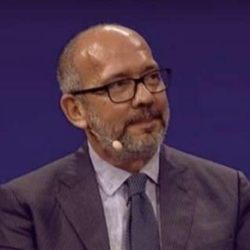
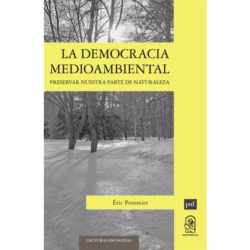
Prof. Dr. Éric Pommier, research fellow at International Center of Studies on Contemporary Nihilism (CeNic), has published La Democracia Medioambiental. Preservar nuestra parte de la naturaleza (Ediciones UC, 2022). This book, originally published in French by PUF (2022), proposes to explore ways of reconciling the ethical and the political through the concept of environmental democracy. In the context of the deployment of technical power and its threats, increasing attention is being paid to the need of defending a principle of responsibility towards future generations, life and Earth. However, it is not clear, on the one hand, how the interests of future generations could be represented –since they have not yet been born– and, on the other, how the interests of living beings and Earth could be defended, since they are not subjects of law. Is it to be concluded from this that the new ethical demand is only an unrealizable utopia, which could even be dangerous for democracies if its realization is sought at all costs? If it is possible to criticize democracy for its lack of concern for the planet, living beings and future generations, it is also possible to distance oneself from a regime that seeks to defend these interests in detriment of the rights of classical subjects, i.e., contemporary humanity.

New publication – Prof. Dr. Adriano Fabris.


Prof. Dr. Adriano Fabris, co-director and research fellow of International Centre of Studies on Contemporary Nihilism (CeNic), has published Heidegger. Una guida (Carocci editore, 2023). The volume consists of ten chapters, written by some of the leading scholars of the German philosopher (Adriano Fabris, Stefano Bancalari, Francesco Camera, Costantino Esposito, Giusi Strummiello, Adriano Ardovino, Eugenio Mazzarella, Carmine Di Martino, Virgilio Cesarone, Aldo Magris), presenting in a clear and exhaustive way the main themes of Heideggerian philosophy: Phenomenology, hermeneutics, ontology, the “thought of Ereignis”, meditations on the work of art and poetry, as well as those on technology and questions of ecological impact, including the nexus with Christianity. An updated bibliography and an explanatory index by Annalisa Caputo of the fundamental concepts used by Heidegger in his research complete the volume.

New Publication: Prof. Dr. Žarko Paić


Prof. Dr. Žarko Paić, research fellow at International Center of Studies on Contemporary Nihilism (CeNic), has published The Technosphere as a New Aesthetic (Cambridge Scholars Publishing, 2022). This collection, devoted to the theme of Homo Kybernetes, examines the genesis and development of various considerations of the technosphere as an aesthetic problem. The contributions collected in the book reflect on cybernetic thought as a condition of possibility of digital aesthetics, and on the possibilities of transition of human sensibility towards a different mode of bodily existence. The volume brings together contributions by Massimo De Carolis, Adriano Fabris, Dieter Mersch, Žarko Paić, David Edward Rose, Stefan Lorenz Sorgner, Miško Šuvaković, Tonči Valentić and Natasha Vita-More.


New publication: Prof. Dr. Werner Stegmaier


Prof. Dr. Werner Stegmaier, research fellow at the International Center of Studies on Contemporary Nihilism (CeNic), has published Nietzsche an der Arbeit. Das Gewicht seiner nachgelassenen Aufzeichnungen für sein Philosophieren (Walter de Gruyter, 2022), which focuses on the methodical development of Nietzsche’s philosphy through a contextual, differential and chronological interpretation, and on his philosophy in general as a continuous process of orientation in the sense of the Philosophy of Orientation developed by the author. For Nietzsche the transformation of the content of his thought has a special role, which is still expressed in the Fragments in a way that reveals itself to those who understand it. The book brings together three of Prof. Dr. Stegmaier’s main fields of research: research on the philosopher from Röcken, the Philosophy of Orientation and the forms of philosophical writing.

New publication: Prof. Dr. Raúl Fornet-Betancourt


Prof. Dr. Raúl Fornet-Betancourt, researcher fellow of the International Center of Studies on Contemporary Nihilism (CeNic), has recently published Modelos de teoría liberadora en la historia de la filosofía europea (2022) by Favila Publishing House (Bogotá, Colombia). This book is part of the ‘Intercultural Philosophy’ project that Prof. Dr. Fornet-Betancourt has been developing since the 1990s. It is a dialogical proposal between marginalized philosophical traditions and even, as he himself states: “often consciously and systematically oppressed”, which, approached from a liberating vision, show us all their potential and effective knowledge, against the oppression of the philosophical canon, which by marginalizing them maintains its colonial hegemony. The European philosophical tradition has created over time a canon that has been fragmenting in recent years. This work accounts for this fragmentation and opens up old, but fruitful, and sometimes little-traveled paths.

New publication. Prof. Dr. Gaetano Chiurazzi


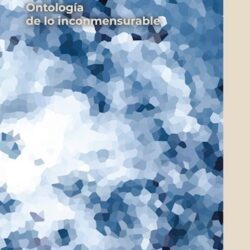
Prof. Dr. Gaetano Chiurazzi, research member of the International Center of Studies on Contemporary Nihilism (CeNic), has recently published Dynamis. Ontología de lo inconmensurable (2022, Sevilla: Fénix). In this book Prof. Chiurazzi argues that the roots of the dynamical ontology outlined in Plato’s late dialogues, culminating in the definition of Being as dynamis in the Sophist, can be traced back to the mathematical debate on incommensurable quantities, which are presented as a solution to the problem of non-being. This implies the passage to a form of non-measuring, but mediating rationality, which will end up finding its maximum expression in Kantian transcendentalism and in the various philosophies derived from it, from Hegelianism to the hermeneutics of the nineteenth century. Thus, the demonstration of the incommensurability of the diagonal is not only the turning point towards an ontology of dynamis, but the fundamental presupposition of an intrinsically differential ontology and of a truly transformative and emancipatory conception of reason. Incommensurability represents, in fact, the concept of an exteriority or surplus irreducible to a given domain and, therefore, the foundation of what is designated as a “microphysics of freedom”.

President of Italy decorates Prof. Dr. Adriano Fabris


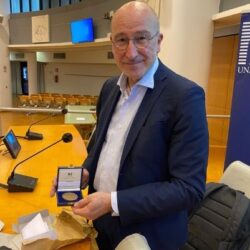
The President of the Italian Republic, Sergio Mattarella, has awarded a presidential recognition to Prof. Dr. Adriano Fabris, co-director and research member of the International Center of Study on Contemporary Nihilism (CeNic), as an exaltation for his leadership of the Italian Society of Moral Philosophy (2019-2022). This medal is also a recognition of the work done by the Italian Society for Moral Philosophy in recent years and its promotion of the presence of moral philosophy in the public debate through numerous academic activities such as conferences, congresses, specialized blogs, the foundation of the journal Filosofia morale etc.

New publication: Prof. Dr. Eric Pommier


Prof. Dr. Eric Pommier, research fellow at the International Center of Study on Contemporary Nihilism (CeNic), has published La condition sensible. Chair, Événement, Éros (Hermann, Paris, 2022). In this book, Prof. Pommier takes as a starting point the role of the body as the center of sensitive perception, for the body is not only in the world, but also allows man to unfold in the perceived world. Consequently, the body acquires a double dimension of belonging and openness. This presupposes a first sensible gift by which the body is, on the one hand, what is-there in the world and, on the other hand, what constitutes the world.

In describing the phenomenon of perception, phenomenology is compelled to trace back from the world in which we find ourselves to the source of appearances, to the intentional consciousness that animates a pure sensible matter. This leads to a series of questions that the author addresses through a dialogue with the contemporary phenomenological tradition: how to account for the gift of this sensible matter? Should we settle for a transcendental conception of the flesh to account for this pure feeling? Or should we and can we go further back, towards an event thanks to which there is sensibility? Would the function of the flesh then be to ensure the passage between this first gift of the sensible and the world as we constitute it? Would the exploration of the erotic body be able to reconcile the flesh with itself and thus give us the secret of our sensible condition?

New publication: Prof. Dr. Žarko Paić


Prof. Dr. Žarko Paić, research fellow at the International Center for the Study of Contemporary Nihilism (CeNic), has recently published the book Art and the Technosphere: The Platforms of Strings (2022) by Cambridge Scholars Publishing. In this book, Prof. Dr. Žarko Paić, starting from the analysis of the relationship between aesthetics and contemporary art, investigates hermeneutics, phenomenology and semiotics with regard to the notion of image and its new status in avant-garde art, which turned towards the analysis of posthumanism/transhumanism.

Also, the author points out the importance of starting to think about the aesthetic construction of worlds, instead of representing the idea in its eternity, and explains that contemporary art from avant-garde procedures of shock, provocation and experimentation enters the field of metatheory of visualization of the event. Prof. Dr. Paić indicates that the problem is no longer to inquire into “what” art is, but “how” the difference between the aesthetic object and artificial life is to be determined, insofar as the event of creation and enjoyment in a digital simulation constitutes a historical development of art.

New publication: Prof. Dr. Gaetano Chiurazzi


Prof. Dr. Gaetano Chiurazzi, research member of the International Center of Study on Contemporary Nihilism (CeNic), has recently published the book Compreensão, História, Contingência. Ensaios sobre Heidegger e a hermeneutica (2022), at Paco editorial (Brazil), which brings a series of essays on Heidegger’s philosophy and hermeneutics (2022). This work addresses issues such as the problem of realism and justice, the pragmatic dimension of existence, alterity, among others, which are grouped around three fundamental concepts that mark the historical and philosophical development of hermeneutics: understanding, history and contingency.

Prof. Dr. Chiurazzi also analyzes the true philosophical content of hermeneutics, placing this question under the approach of the three central concepts (understanding, history and contingency) and considering Heidegger’s philosophy in dialogue with other philosophers (Anaximander, Leibniz, Nietzsche, Husserl, Wittgenstein, Foucault, Gadamer).